Chapter 5 Procrastination and time preference
5.1 In a nutshell
Procrastination, or the tendency to postpone actions which are costly now and generate benefits in the (distant) future is a major feature of human behaviour. It represents a systematic deviation from the rational choice theory most policies implicitly rely on, and engenders large personal and social losses. Hopefully, we have several tried-and-tested behavioural levers to help people overcoming this tendency, from lowering short-term costs to make long-term gains more salient.
5.2 Procrastination?
I trust we all know someone who is incredibly organized, always on time, seems to have her life fully planned weeks, if not years, in advance. We, on the other hand, are chronically late for dental check-up32 Full disclosure: I finally scheduled mine, this afternoon, when preparing this class., preparing classes, turning in papers, perform administrative work, not to mention calling back family and friends.
Figure 5.1: Calvin and Hobbes cartoon, by Bill Watterson
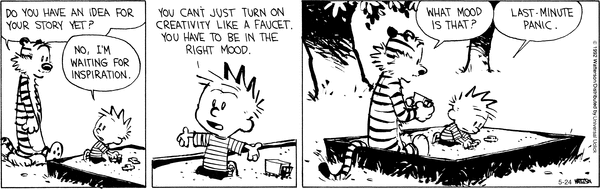
If this cartoon rings true, it is because this is a very frequent trait. Most humans have the tendency to prioritize activities with immediate rewards, if small, over activities with present costs but future rewards – even if the latter are large.
5.3 From present preference to procrastination, through present bias
In the terms of rational choice theory, procrastination is seen as the result of a present bias: we value the present more than what a time-consistent actor would do. This section presents the core theoretical and experimental underpinning of the phenomenon.
5.3.1 Measuring your present bias
Present bias is commonly measured through intertemporal choice experiments, for example this one lifted from (George Ainslie and Varda Haendel 1983George Ainslie and Varda Haendel. 1983. “The Motives of the Will.” In Etiologic Aspects of Alcohol and Drug Abuse, edited by E. Gottheil, K. Druley, T. Skodola, and H. Waxman, vol. 3. Charles C. Thomas.). You have to choose one option in each line:
- €50 now or €100 in six months
- €50 in three months or €100 in nine months
- €50 in one year or €100 in one year and a half
Under standard economic theory, all three choices are the same. If your preference are time-consistent, the only relevant elements are the money amounts (they are the same) and the delay between the first and second option (six months in each case). The delay between now and the first choice should be irrelevant. In practice, few people make time-consistent choices in this experiment: the farther the date of the first option, the more likely we are to choose the second option: it seems we think we’ll be more patient tomorrow than today. Instead of the standard exponential discounting (standard because it is actually the only time-consistent discounting function), we seem to rely of a form of hyperbolic discounting, which make us more impatient with respect to immediate choices, and more patient with respect to choices farther in the future.33 See the Annex for a formalized demonstration.
Modern life is full of activities which require a significant effort now for rewards in the distant future. Education is a prime example. In such an environment, and especially if things are designed around time-consistent rational choice, hyperbolic discounting will lead us to suboptimal choices and behaviours.
5.3.2 The Marshmallow test
The marshmallow test is one of the best-know experiment in social psychology. The usual narrative is that experimenter left children alone in a room with a marshmallow, telling them that if they refrained from eating it by the time the experimenter gets back, they’ll get two marshmallows. It turned out in follow-ups that children who waited longer had better outcomes (lower body mass index, better academic performance). The implication is that it is a test for self-control, or the ability to delay gratification, which reflect an ability to overcome the procrastination tendency.
 Figure 5.2: A child in front of a lashmallow
The setup of the original experiment (Mischel et al. 1972Mischel, Walter, Ebbe B. Ebbesen, and Antonette Raskoff Zeiss. 1972. “Cognitive and Attentional Mechanisms in Delay of Gratification.” Journal of Personality and Social Psychology (US) 21 (2): 204–18. https://doi.org/10.1037/h0032198.) is actually more complicated, since it describes three experiments with several conditions per experiments (fun or sad thought, visibility of not of the candy, and so on34 I don’t think that a sample of 93 children would be acceptable now for that many variations.). However, the simplified version is the one which is used in most replications – and the experiment does replicate well – and for which we have long-term follow-ups, which confirm the correlation between the ability to delay gratification as a child and latter outcomes.
Some replications, with much larger sample size, included conceptual replication, including additional outcomes in the follow-up, prominently problem behaviour (negative outcome). The larger sample size allows for the inclusion of a higher number of control variables. Indeed, (Michaelson and Munakata 2020Michaelson, Laura E., and Yuko Munakata. 2020. “Same Data Set, Different Conclusions: Preschool Delay of Gratification Predicts Later Behavioral Outcomes in a Preregistered Study.” Psychological Science 31 (2): 193–201. https://doi.org/10.1177/0956797619896270.) show that once variables describing the level of social support (including parental education) is taken into account, the test loses all its predictive power on future problem behaviours. The implication is that the ability to delay gratification is to a large extent learned, with a stronger emphasis in stable, educated environment. In other words, the marshmallow test does not test for an innate level of ability to delay gratification, but for a socially-constructed one, which appears to be fairly stable over the observation period, and strongly associated with relevant social outcomes.35 Since immediate gratification may be adaptive in scarcity environment, we do not have enough information to decide whether this persistence is due to a lock-in at a young age or to low social mobility.
5.3.3 Do kids get worse at self-control?
One side effect of the many replications on the marshmallow test is that we have data on children’s self-control over several decades (at least for the US). We can thus test the common idea that children are getting more and more prone to prefer immediate rewards. Kids these days… (Protzko 2017Protzko, John. 2017. “Kids These Days: 50 Years of the Marshmallow Task.” OSF, April 26. https://osf.io/8s3gy/.) ask a number of behavioural experts what their opinion on the subject was.
Figure 5.3: Protzko, J. (2017)
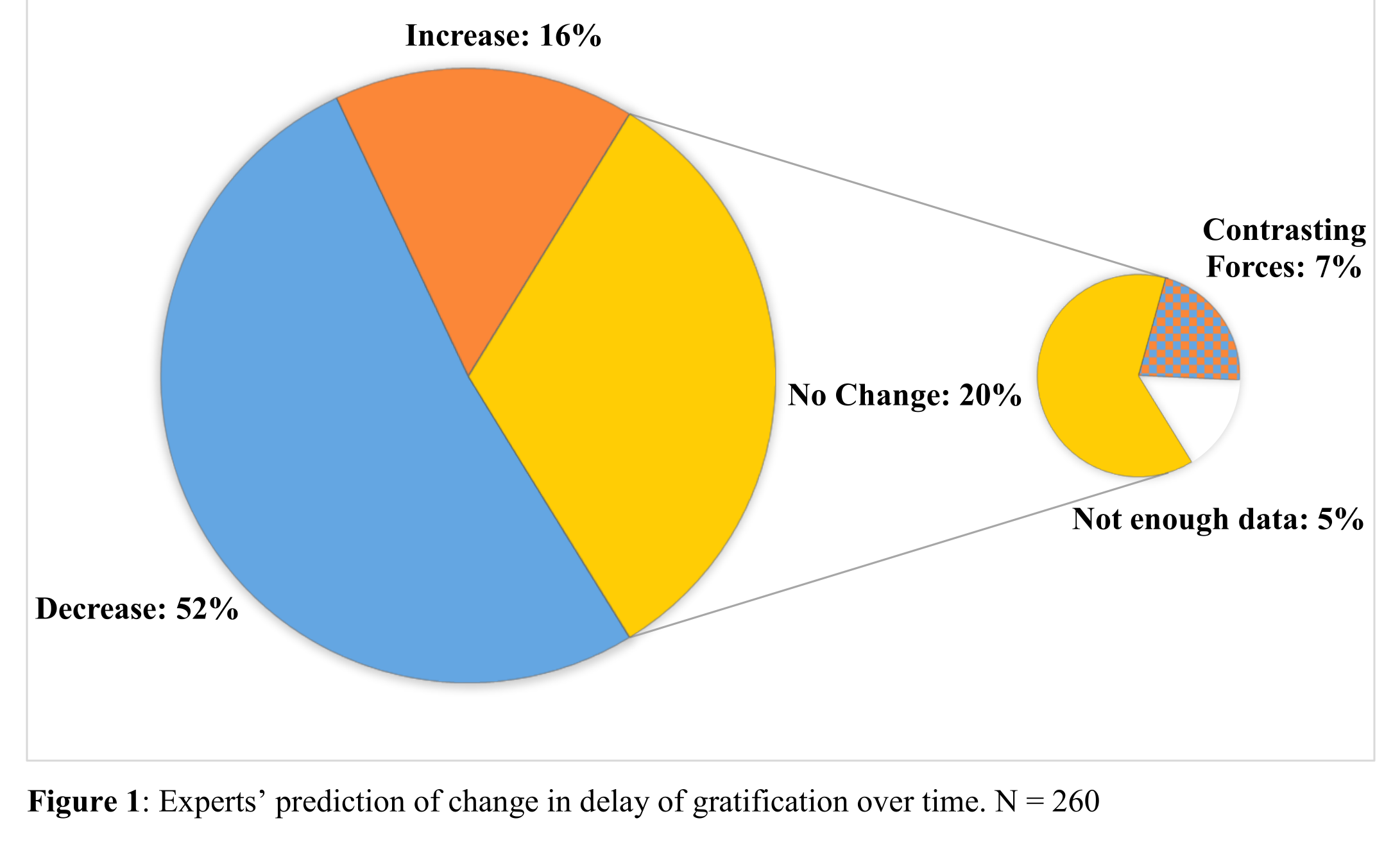
Most shared the common conception that children are getting more impatient than a few decades ago. This idea of children behaving worse that the previous generation has apparently been around for quite a long time. The first documented instance in my knowledge is Aristophanes’ The Cloud play. Which should induce some caution: can each passing generation have been a self-control disaster for that long?
Figure 5.4: Protzko, J. (2017)
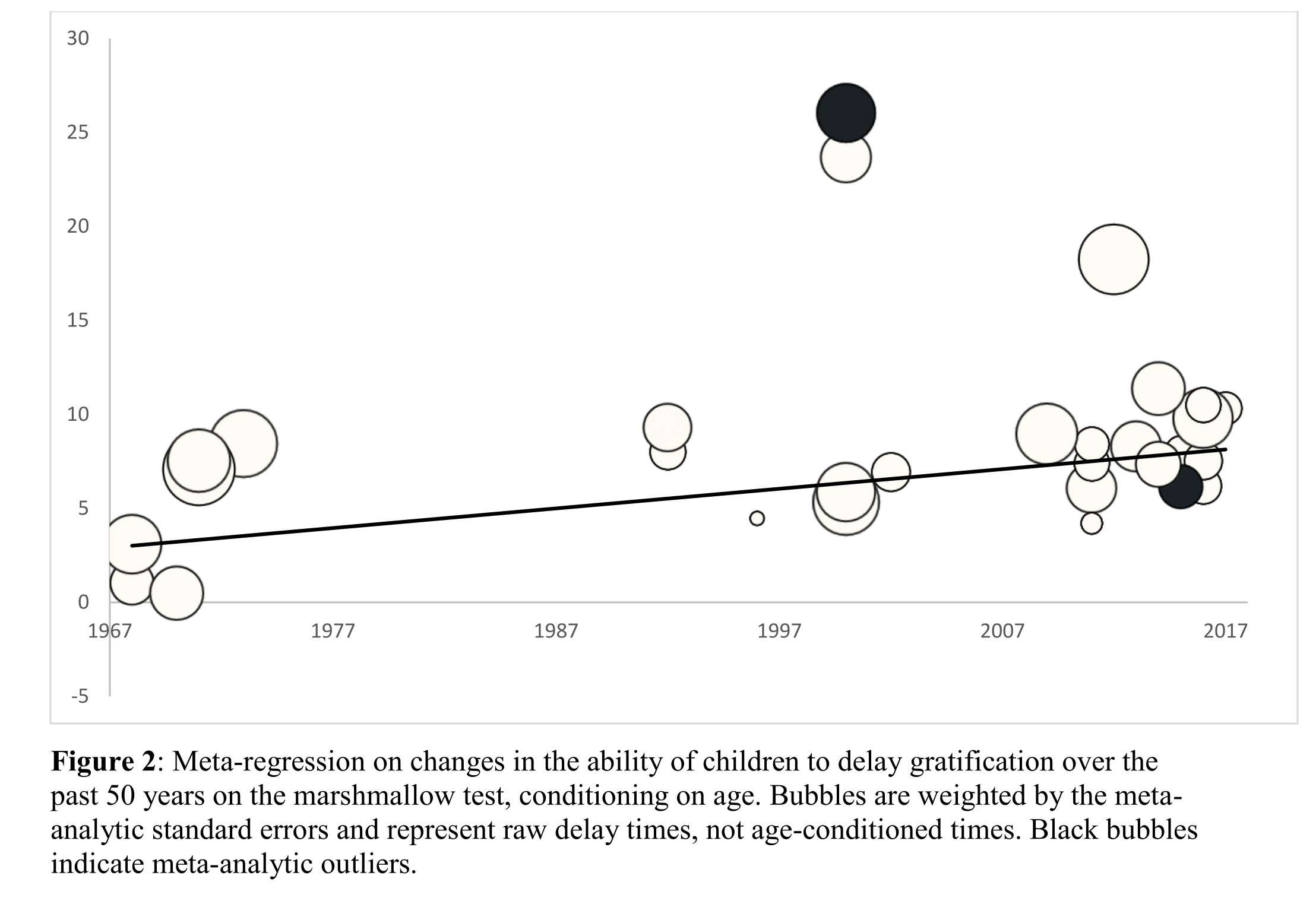
The data warrants this caution. Over the years, the marshmallow experiment shows not evidence of an increased present bias. The tendency would instead be a slight increase in the ability to delay gratification. Can we explain that? Building on what we have seen before, we should have expected it. On the one hand, the 1960s – 2010s range of the study saw a massive increase in the accession to higher education. Given the social heritability of the trait, we would expect an increase. As a testimony to that, in the 1950s, “low education background” meant people with little to no secondary education. Now, this includes college drop-outs36 On the French case, bear in mind that about half of the adult population has a level of education lower than the Baccalauréat, even if this is the case of less than 20% for generations born in the 1980s..
This longish exposition of a well-known experiment should draw your attention to the fact that it is often useful to actually read the original paper, and not just the second-hand accounts, and also draw your attention to the fact that socio-economic categories change over time, muddling long-term comparisons.
5.4 The policy issues with procrastination
In the previous, section I alluded to hyperbolic discounting, or let us just say procrastination, being maladaptive in many contexts. It may be worth documenting this not only from a rational agent perspective (“These people should be saving more”), but also from a subjective one (“I know I should save more / stop smoking / exercise more”).
5.4.1 Procrastination across life domains
As (Hen and Goroshit 2018Hen, Meirav, and Marina Goroshit. 2018. “General and Life-Domain Procrastination in Highly Educated Adults in Israel.” Frontiers in Psychology 9 (July): 1173. https://doi.org/10.3389/fpsyg.2018.01173.) show, even among highly-educated people living in a reasonably affluent society, the degree of regret with respect to procrastination is significant.
Figure 5.5: Figure from Hen 2018: self-reported procrastination level, by life domain.
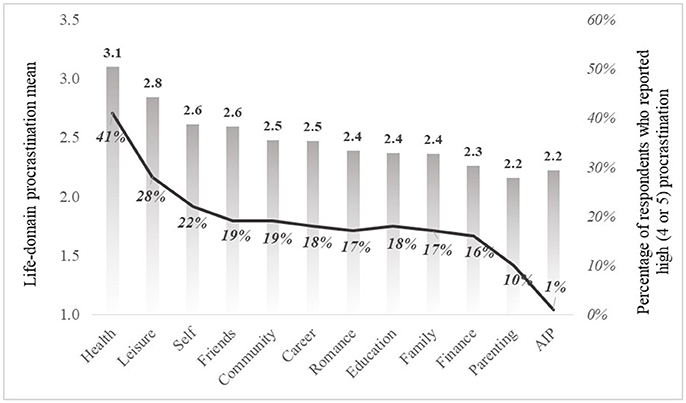
On a scale from 1 to 5, 41% of respondent report a high (4 or 5) level of procrastination with respect to health behaviours. We see that reported rates are very different across life domains. This variability certainly exists, but it is probably magnified here by a social desirability response bias: people are much more tolerant if you say that you routinely postpone your appointment with your dentist than if you admit shirking in following you child’s homework. It should also be noted that the declared tendency to procrastinate does not correlate well with the self-assessed importance of life domains – health being a perennial top of the list, along with family and friends.
From an evolutionnary pespective, we can note that many people enjoy spending time with children, including reading the same story over and over again, or with friends, including listening to the serial complainer. In small-scale societies, these activities provided selective benefits (healthier children, stronger support network), so evolutionary pressure may have selected individuals with a taste for these activities, finding intrinsic motivation to perform them. Conversely, other behaviours, such as excessive eating, smoking or lack of exercise, are more recent in our evolutionary history, this less likely to be selected negatively. Furthermore, the induced risks tend to occur later in life, when most of the reproductive history and hence selective pressure, is over. In the meantime, social structures have stepped in, providing punishment and rewards for some domains – parenting, financial planning – but at this date less so on others.
5.4.3 Student procrastination
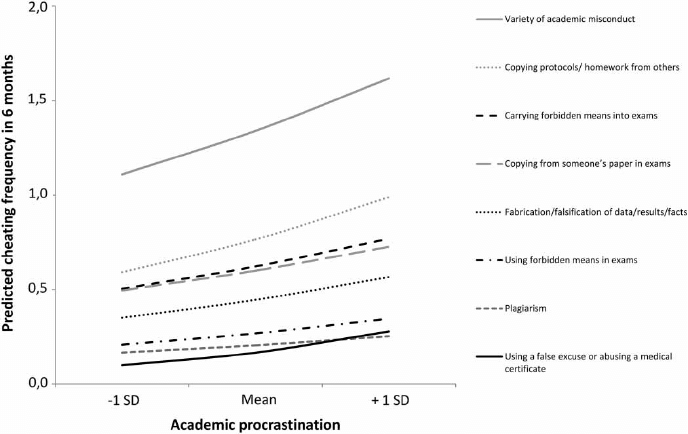
Closer to home, procrastination among students is a common complain in teachers’ rooms. Not only there, actually: (Kim and Seo 2015Kim, Kyung Ryung, and Eun Hee Seo. 2015. “The Relationship Between Procrastination and Academic Performance: A Meta-Analysis.” Personality and Individual Differences 82 (August): 26–33. https://doi.org/10.1016/j.paid.2015.02.038.) show that a majority of students declare they procrastinate, and wish they didn’t. They consciously know they are time-inconsistent, regret it, but fail to manage it. This feeling of procrastination is associated with deleterious outcomes, mainly lower grades, lower learning, and higher anxiety. (Patrzek et al. 2015) adds that not only is procrastination unambiguously presented as bad by the students themselves, it seems to link with a wide range of misconducts, with 75% of students admitting engaging in a misconduct fo some kind over the last 6 months.
Figure 5.7: Procrastination and academic misconduct
Student procrastination is compounded by the fact consciousness of the problem does not make us significantly better at managing it. To illustrate this point, (Ariely 2010Ariely, Dan. 2010. Predictably irrational: the hidden forces that shape our decisions. HarperCollins publishers.) provides a nice experiment. In each of his 12 classes, students had to hand 3 papers before the end of the term. Classes were randomized across three conditions:
- Self-imposed: Students choose their own deadlines, penalty for not meeting them
- Dictatorial: The teacher chooses all 3 deadlines
- Full freedom: Papers handed before end of term.
Rational choice theory predicts that the performance in condition 3 should be better than in condition 1, since the latter does not allow flexibility for unexpected events, and 1 should be better than 2, since each student has the ability to optimize their working schedule according to their idiosyncratic constraints. The actual order of average performance was the exact opposite:
Dictatorial > Self-imposed > Full Freedom
The real surprise comes from the fact that teacher-chosen deadlines (evenly spaced throughout the term) worked better than self-imposed ones. Within the self-imposed group, students who by their own initiative set evenly-spaced deadlines performed as well as those in the dictatorial condition (but not appreciably better), while the lower performance was due to students who bunched the dates later in the term, probably incorrectly forecasting their tendency to procrastinate overall, leading to an overload in the latter part of the term.
5.5 Behavioural levers: can we fight procrastination today?
Behavioural approaches provide a wide set of tools to help people facing negative consequences from their own procrastination. Basically, these fall into four families:
- Create or increase short-term rewards
- Decrease the short-term cost
- Make the long-term gains and losses more salient
- Create a short-term penalty of procrastinating
5.5.1 Symbolic rewards, real effects
The economic go-to solution to procrastination would be to provide financial incentives (a.k.a. monetary rewards) for engaging in the desired behaviour. These have two major drawbacks from a public policy perspective. They are costly to implement, and not only because of the amount of money provided as a reward. For small amounts, the cost of setting up the payment system may be higher than the cost of the payment themselves. They can also be easy to game (see Cobra effect), and may crowd out other motivations (see the blood donation case). So we are looking for something else. Fortunately, symbolic rewards also have real effects of behaviours, with fewer of the drawbacks.
 Figure 5.8: Badge displayed on users’ page, By Edelweiss-Auszeichnung - Own work, CC BY-SA 3.0
Let me illustrate that with an experiment conducted in 2016 on the German-speaking Wikipedia project: (Gallus 2017Gallus, Jana. 2017. “Fostering Public Good Contributions with Symbolic Awards: A Large-Scale Natural Field Experiment at Wikipedia.” Management Science 63 (12): 3999–4015. https://doi.org/10.1287/mnsc.2016.2540.). This experiment was co-constructed with the German-speaking Wikipedia community37 This is a must for experiments run on a Wikipedia project. Also, be aware that Wikipedia projects work along linguistic lines (English, German, French, Spanish), and not along national lines.. The issue was that the encyclopedia had a low retention rate of new contributors, and most of those who stayed had a very limited level of activity.
The crux of the intervention was to give badges displayed on users’ pages, and a project-wide leaderboard. The badges were said to distinguish significant contributions to the project. The exact criteria were not disclosed, because the badges were actually allocated at random among new users who had more than a minimal level of activity. The outside reputational effects of the badge are very limited. Most users contribute to Wikipedia under a pseudonym. Outsiders are not likely to be able to link a given user account to a person. Furthermore, user pages are not indexed by search engines. Even within the Wikipedia environment, you go to a user’s page only when you have something specific to see or say. Most interaction occur on other pages (articles, article discussion pages and community spaces), where the badge was not readily observable. Hence, the impact is mainly a private self-esteem boost.
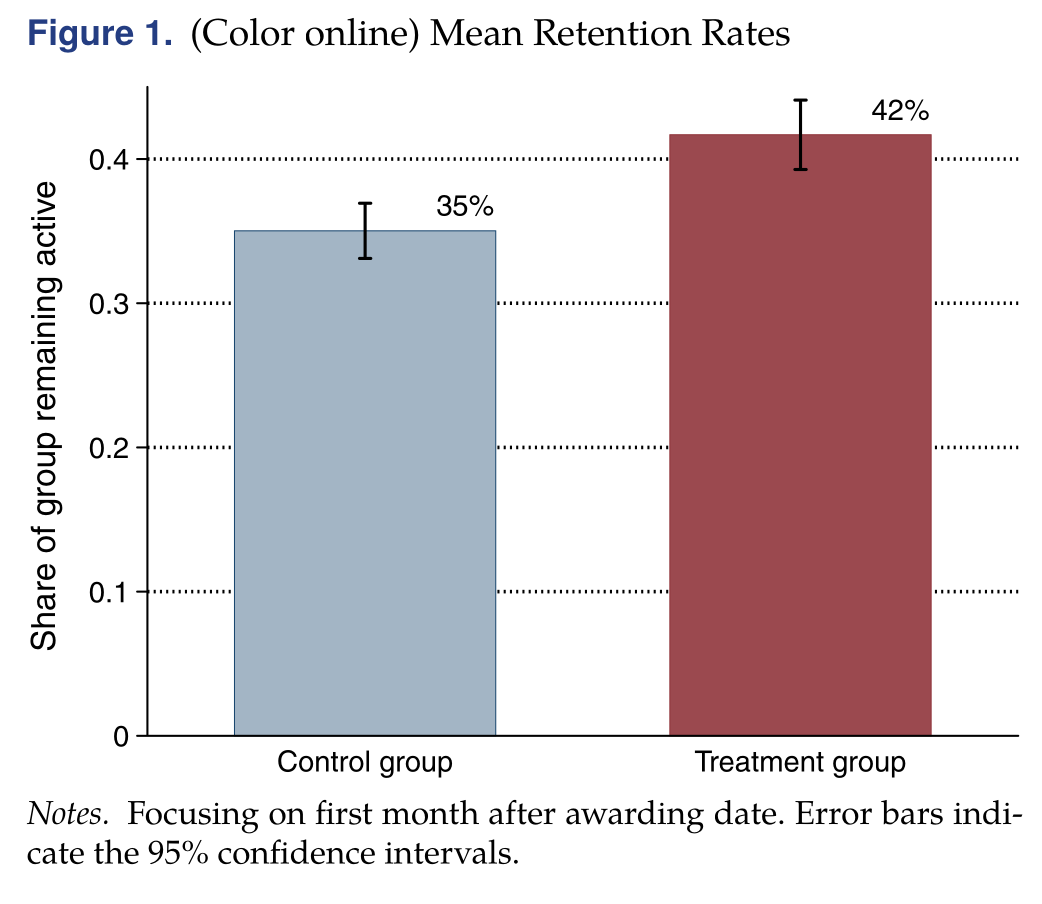
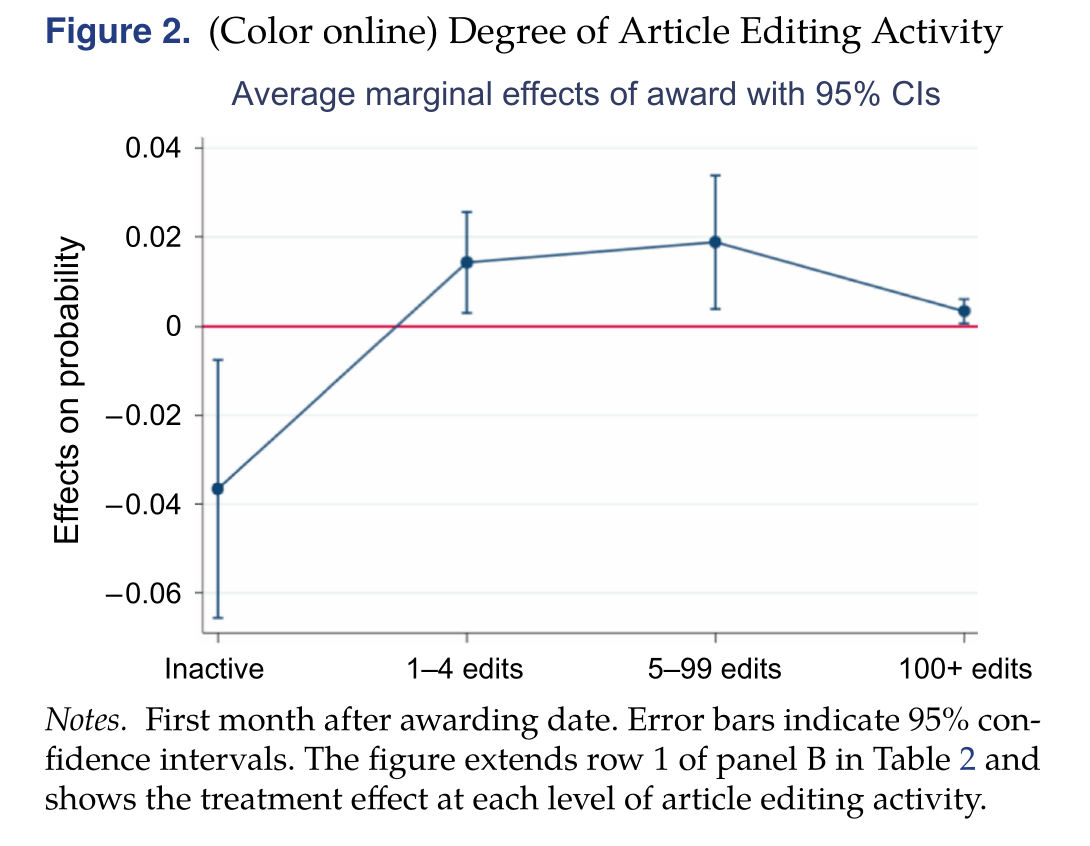 Figure 5.9: Impact of the randomly-awarded badge
The result charts show that this self-esteem boost the retention rate one month later from 35% to 42%, and leads to an increase of the number of edits. On the effect distribution, it should be noted that the usefulness to the project on the 1-4 edits group is debatable. Number of edits is a not a good metric. One edit can mean anything from correcting a typo (useful, yet, but low degree of engagement) to writing a whole page. The higher range of the 5-99 edits denotes a significant activity, and people above 100 are hooked, but the effect is barely significant. I’d argue that edits are used here because they are easy to measure and do not require any judgement on the quality of said edits. In terms of improving Wikipedia, it is a poor proxy at best.
Other examples include medals for giving blood, with an Italian experiment which shows that it works when people are made aware of the thresholds and the award is public. People give more often to reach the medal threshold, with limited rebound (lower donation frequency) after the medal threshold. Over and well above published experiments, the ubiquity of such rewards in apps (fitness, health, student aid, period tracking, about anything in fact) is a proof of efficiency, these structures notoriously conducting large-scale A/B testing to assess the effectiveness of such devices.
5.5.2 Decrease the short-term cost
When the short-term cost of an action can be acted upon, it represents a powerful lever to close the intention-action gap. We saw earlier several examples under the “make it simpler” principle, applied to administrative tasks: simplify forms, appointment booking, etc. It also extends to more material situations: on-site blood collections are a case in point.
5.5.3 Make long-term consequences salient
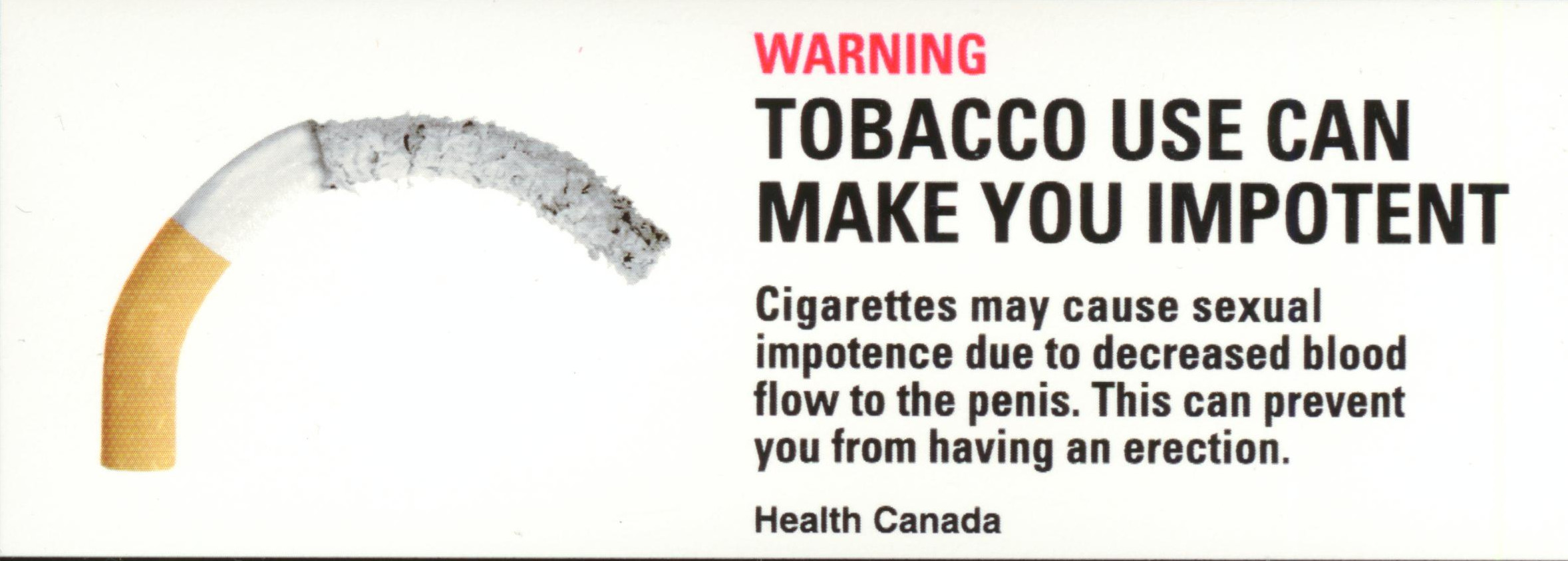 Figure 5.10: Sample tobacco warning. I choose one of the less graphic.
Hyperbolic discounting can be countered through the availability heuristic, by making long-term consequences of procrastination more salient. This practice is often used to highlight negative future consequences. Tobacco warning campaigns are a case in point, illustrating, often in a very graphic, if not grisly, way the long-terms consequences of smoking on the body. Multiple studies show that the introduction of graphic warnings has led to an increased number of people quitting smoking. The impact of initial uptake is however limited: it seems that for young people, these consequences are seen as too far in time to really matter.
5.5.4 Commitment devices
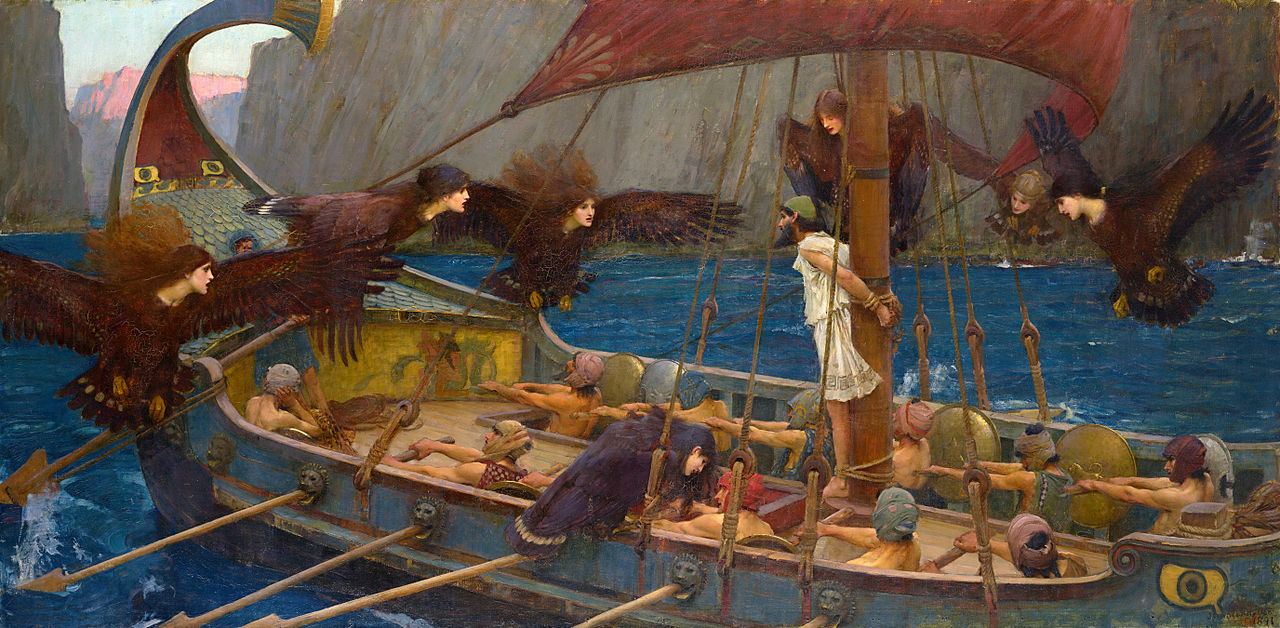 Figure 5.11: XIXth century depiction, by John William Waterhouse.
Commitment devices are rules or objects whose main purpose is to make the postponing behaviour more costly, or even impossible. The archetypal commitment device story is when Odysseus wants to hear the sirens’ song, but not be lured by them. He has his crew put wax on their ears, and tie him on to the mast, with strict instruction to disregard any order he may give until they are well past the sirens’ abode. On the same note, some biographers recount that Victor Hugo ordered his valet to keep his clothes from him until he reached a pre-defined number of pages on Notre-Dame de Paris each morning38 While the story is widely cited, the source of the anecdote is unknown..
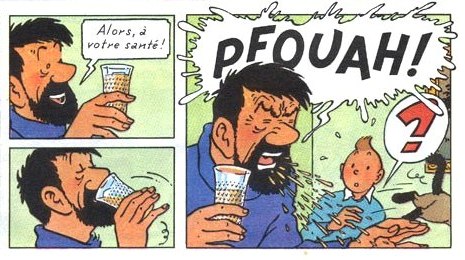 Figure 5.12: Involutary commitment device, from Tintin et les Picaros.
In economics, the idea that the ability to commit oneself expands the set of available policies is the core point of the landmark (Kydland and Prescott 1977Kydland, Finn E., and Edward C. Prescott. 1977. “Rules Rather Than Discretion: The Inconsistency of Optimal Plans.” Journal of Political Economy 85 (3): 473–91. https://www.jstor.org/stable/1830193.) result about monetary policy in times of inflation. If you know you are not time-consistent, the ability to set yourself a constraint costly to renegotiate (a commitment device) can make credible an policy people would expect you to renege on otherwise. The application is a central bank which has a dual mandate: price stability and low unemployment. To foster price stability, it has an incentive to target a high interest rate. But when rate-depending decisions are made and cannot be readily unmade(e.g. investment), the bank has an incentive to tolerate a higher-than-expected level of inflation since this depresses real wages and thus increases employment.
In fact, commitment devices are all around us. Addiction is a prime field of application. Disulfiram is thus used as a deterrent to alcohol consumption since the 1940s. By inhibiting a step in the degradation of alcohol in the body, disulfiram makes the symptoms of a severe hangover occur very quickly upon ingestion of even small amounts of alcohol. The key thing for us is that patients voluntarily take disulfiram to shore up their resolve not to drink alcohol.
This example resonates with a wide range of products whose sole function is to prevent you from doing something. In the 1990s people enrolled in “fat farms” or food police programs to have other persons control their food intake, sometimes very intrusively. This was also the period of self-sealing cigarette holders, which would open only after a pre-set time had elapsed.
 Figure 5.13: Clocky, the alarm clock which runs away from you
A modern version would be screen timers, such as Apple’s Screen Time. A favourite of mine is the Clocky alarm clock. You can snooze it only once. The second time activates its wheels, which will most of the time lead it to a very inconvenient place, such as under your bed. You then have no choice than actually get out of your bed and fishing it out, by which time you are much less likely to go back to bed. These things sell at around €80, which shows the high value people have for this kind of service.
Heuristics can be leveraged to magnify the short-term cost of procrastinating. From prospect theory, we know that people tend to overweight small probabilities, making lotteries with small odds of a large gain more attractive than the rationally expected value equivalent. In other words, you get more impact from a lottery than from a certain cash payout of the same final amount. (Volpp et al. 2008Volpp, Kevin G., Leslie K. John, Andrea B. Troxel, Laurie Norton, Jennifer Fassbender, and George Loewenstein. 2008. “Financial Incentive-Based Approaches for Weight Loss: A Randomized Trial.” JAMA 300 (22): 2631–37. https://doi.org/10.1001/jama.2008.804.) describes a weight loss program coupled with a daily lottery. Each day, people had to weight themselves on a connected scale. It they met their weight loss objectives, they had a 25% chance of winning $10 and a 1% chance of winning $100. To increase the effect, the process was framed as: you are by default enrolled to the lottery, whose results are drawn whether you met you goal or not, but you forfeit your prize if it is not met. The perspective of not getting the result of a lucky draw thus triggered loss aversion. People enrolled in the treatment group had lost on average 6kg over 4 months, against 2kg for the control group.
5.5.5 Combined interventions
More often than not, interventions actively combine several levers at the same time.
 Figure 5.14: PhD write-in T-shirt
(Ariely 2010Ariely, Dan. 2010. Predictably irrational: the hidden forces that shape our decisions. HarperCollins publishers.) provides us (again) with a fun example. The issue was that University of Chicago PdH students procrastinated in writing their PhD dissertation, prioritizing the conduct of new research. The experiment combined:
- Moral commitment: come to the library every morning for a week to write their dissertation. You involvement is public, and publicly observable by your peers.
- Loss aversion: Students had to make $50 down payment, refunded if the commitment is held.
- Immediate rewards: Students actually coming got access to free coffee and pastries.
- Symbolic reward: “I write, so I finish” T-shirt
5.6 Timeliness
At the society level, large, rapid, discontinuous changes in behaviour have been the object of critical juncture theory. Part of this field underline the role of crisis, be they political, social or economic hardships, pandemics, or natural disasters (see for example (Acemoglu and Robinson 2013Acemoglu, Daron, and James A. Robinson. 2013. Why nations fail: the origins of power, prosperity and poverty. Profile books.), and the chapter 1 of (Green 2024Green, Duncan. 2024. How Change Happens. 2nd ed. Oxford University Press. https://academic.oup.com/book/57633.)), in providing the right circumstances for a drastic change in the stance of policy-makers. As I hinted at in the introduction (following (Oliver 2017Oliver, Adam. 2017. The Origins of Behavioural Public Policy. Cambridge University Press. https://doi.org/10.1017/9781108225120.)), the Great Financial Crisis of 2008 was such a time for behavioural public policy as a whole. We already touched on this subject when talking about the behavioural cascades described in (Frank 2020Frank, Robert. 2020. Under the Influence. Princeton University Press. https://press.princeton.edu/books/hardcover/9780691193083/under-the-influence.)
At an individual level, this translates into the concept of timeliness, famously highlighted as the last letter of the BIT EAST framework. The core idea is that people are more receptive to messages at critical times of their lives. In the case of tobacco, (Lee et al. 2015Lee, Susan M., Jennifer Landry, Philip M. Jones, Ozzie Buhrmann, and Patricia Morley-Forster. 2015. “Long-Term Quit Rates After a Perioperative Smoking Cessation Randomized Controlled Trial.” Anesthesia and Analgesia 120 (3): 582–87. https://doi.org/10.1213/ANE.0000000000000555.) shows that smokers are more likely to quit if they have a conversation with a doctor around the time of a scheduled, non-tobacco-related, surgery than if they have the same conversation at another time. More generally, the ADEME (Aldeghi et al. 2021Aldeghi, Isa, Nelly Guisse, Colette Maes, Charlotte Millot, ADEME, and Cr’edoc. 2021. Les évènements de vie comme opportunités pour encourager des pratiques écoresponsables. ADEME; ADEME. https://librairie.ademe.fr/consommer-autrement/4622-les-evenements-de-vie-comme-opportunites-pour-encourager-des-pratiques-ecoresponsables.html.) lists a selection of life steps (graduation, moving, birth of a child, marriage, new job, etc.) when people are more likely to heed calls to change habits and behaviours.
It is however easy to misattribute to timeliness effects the impacts of hidden constraints. In a development setting, (Duflo et al. 2011Duflo, Esther, Michael Kremer, and Jonathan Robinson. 2011. “Nudging Farmers to Use Fertilizer: Theory and Experimental Evidence from Kenya.” American Economic Review 101 (6): 2350–90. https://doi.org/10.1257/aer.101.6.2350.) show that Kenyan farmers are more receptive to a small discount on fertilizers just after the harvest than to much larger discounts later on (when they actually need the fertilizers). While present bias should not be ruled out, it should be noted that this upfront acquisition of fertilizer actually works as a commitment device. Just after the harvest is the time of the year when farmers have the more cash. Pre-ordering fertilizer with an upfront payment is a way to tie in that cash, and avoid not only time inconsistency, but also request for help from relatives during the rest of the year.
This last example highlight the fact that not all present preference is harmful. You have to carefully delineate the reasons for this preference, with an eye for objective or perceived uncertainty or scarcity. In such cases, present preference may be adaptive, and external conditions need to be changed first. A case in point is homelessness. The best, and in fact only, efficient policy against homelessness is to provide lodgings, with as few strings attached as possible. Reasonable quality housing for homeless people, with flexible arrangements, leads to large reductions in alcohol consumption and much better adherence to rehabilitation and reinsertion programs than does housing conditional on lower drinking or other behavioural requirements.
5.7 Bottom line
A great many of the behavioural policy issues can be framed as consequences of procrastination. This makes especially valuable to understand what are peoples’ perception of these choices (and not just third parties’ assessment of them) — present preference can be rational — and to be familiar with the main behavioural devices which work to foster action.
5.8 Annex: Hyperbolic discounting
In utility theory parlance, this is modeled as hyperbolic discounting. Instead of the common exponential discount function \(f(t) = \exp^{-rt}\), an hyperbolic discounting function will be like \(g(t) = 1 / (1+rt)\).
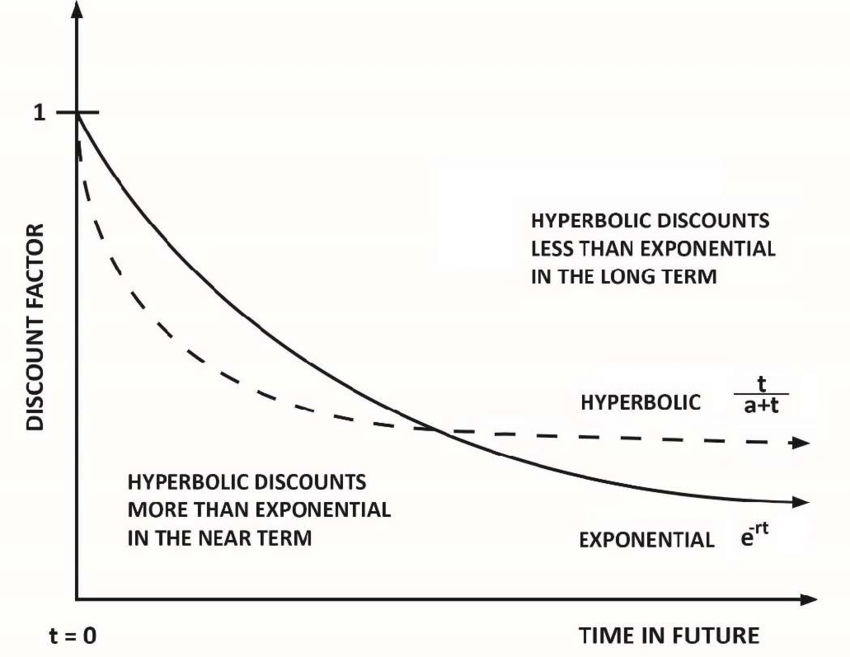 Figure 5.15: Hyperbolic discounting
If we take a generalized case of the above example, let \(t\) be the date of the first option and \(t+n\) the date of the second option. Under exponential discounting, the present value of the two options are \(50\exp^{-rt}\) and \(100\exp^{-r(t+n)}\). The value of option 2 (waiting) relative to option 1 is thus:
\[\frac{100\exp^{-r(t+n)}}{50\exp^{-rt}} = 2\exp^{-rn}\]
In this expression, the delay \(t\) from now to the first option disappears: since you are time-consistent, the moment you make you choice, up to the time of the first option, is irrelevant. What matters are amounts, and the delay \(n\) between the first and second option.
With an hyperbolic discounting function, the values are \(50/(1+rt)\) and \(100/(1+r(t+n))\). Their relative value is then:
\[\frac{100/(1+r(t+n))}{50/(1+rt)} = 2\frac{1+rt}{1+r(t+n)}\]
With hyperbolic discounting, the relative value of the options, which is the choice determinant, becomes dependent on \(t\). For small delays, the \(rt\) part of the expression have a small effect, and the hyperbolic discounter decides on the basis on the span \(n\) between the first and second option. When \(t\) becomes large, the \(rt\) elements dominate the expression: the further in the future the options are, the less the delay between them matter, modelling a more patient behaviour for choices far in the future.
Hyperbolic discounting models fit well observed deviations from time-consistent rational choice theory in observed behaviours with respect to investment, debt setting or gambling.
5.4.2 Social consequences of procrastination
A chief illustration of the consequences of procrastination is that today, most people die earlier than they would had they adopted healthier behaviours: most preventable causes of death are behaviour-related.
Risky behaviours (alcohol consumption, smoking, eating habits, dangerous driving) are at the top of the causes of preventable deaths – and they are not limited to consequences late in life, young people being frequent victims of reckless driving or driving under influence. The share of preventable deaths is thus in the range of 40% of recorded deaths in the US, and around 30% in France. It should be noted that salient, because dramatic, issues such as opioid overdoses and firearms represent only a small percentage of the bottom line.
Over the last years, the Covid-19 pandemic has underlined this point. Vaccination, masking and physical distancing have been powerful tools to reduce transmission: many, if not most, Covid-19 infection would arguably fall under the “preventable” category. Even the hand washing, while inefficient against Covid-19, has reduced the incidence of diseases such as gastroenteritis, which, while benign for most people, killed hundreds of children each year, a occurrence rate which was previously deemed hard to reduce.